
Unlock Clear Vision with Rhodiola Rosea Supplements

In today's digital world, maintaining eye health is increasingly important, as many individuals regularly engage in prolonged computer use. A key concern associated with digital device usage is digital eye strain, which can cause discomfort and visual challenges. Recent research, such as the study Can Rhodiola rosea supplementation mitigate digital eye strain?, investigates potential solutions to alleviate these symptoms. This study explores the effects of Rhodiola rosea, a natural supplement, on visual performance during extended computer tasks.
Rhodiola rosea, known for its adaptogenic properties, is a popular herbal supplement used to improve mental and physical resilience. Its use aims to enhance the body's response to stress and fatigue, making it a suitable candidate for managing strain caused by extensive visual tasks. The investigation sought to determine if Rhodiola rosea could stabilize ocular accommodation, an essential function for maintaining clear vision at varying distances. This interest arises from its potential to support cognitive and autonomic functions under visual stress.
The study's findings may offer new perspectives on how nutritional supplements can serve as effective tools for managing digital eye strain. These insights are of particular value to individuals who spend significant time in front of screens, whether for work or leisure. As digital device use continues to rise globally, understanding and addressing its impacts on eye health become increasingly pertinent.
Study Design
The design of the study was a triple-blind, placebo-controlled trial involving eighteen young adults. Participants were exposed to visual tasks of varying cognitive demands with Rhodiola rosea or a placebo. The study measured eye accommodation dynamics and symptoms related to digital eye strain using standardized methods. Participants took 1200 mg of Rhodiola rosea supplements per day for four days, followed by a three-day washout period before changing conditions.
The trial sessions included cognitive tasks, like the Stroop test, to simulate conditions that induce mental fatigue and visual strain. Controlled settings ensured consistency, with participants wearing contact lenses to correct any refractive errors, thus standardizing the accommodative demand. Researchers employed an open-field autorefractor to measure accommodative response at varied distances, from near to far.
By using a crossover method, each participant served as their own control, bolstering the study's reliability. This approach allowed the researchers to isolate the effects of the supplement from other variables. Through these comprehensive measures, the study aimed to provide clear insights into how Rhodiola rosea affects visual performance under strenuous conditions.
Study Results
Results from the study indicated that Rhodiola rosea supplementation significantly reduced the variability in eye accommodation during demanding visual tasks. Specifically, reductions were noted at distances of 40 cm and 20 cm, suggesting improved control over visual focus. One notable symptom of digital eye strain, blurred vision when looking into the distance after a near task, was also reduced with supplementation.
However, the study found that the overall accommodative lag, or delay in response time, did not significantly improve with Rhodiola rosea. This highlights the supplement's potential to stabilize but not necessarily speed up accommodative adjustments. Other symptoms related to digital eye strain, such as dry eyes or tiredness, showed no significant changes between the supplement and placebo conditions.
While the results suggest benefits in reducing specific symptoms and accommodation variability, further research is needed to explore the clinical relevance of these findings. The study provides a foundation for more extensive investigations into the role of supplements in managing visual stress.
Recommendation
For healthy individuals, Rhodiola rosea supplementation may offer a way to enhance visual stability during extended screen time. The observed reduction in accommodation variability and certain symptoms makes it a promising candidate for those seeking to manage visual comfort effectively. As screen usage becomes more prevalent, integrating such supplements into daily routines could support overall visual wellness.
It is essential for users to consider Rhodiola rosea as a part of a broader eye health strategy, including regular breaks and proper screen ergonomics. Supplements are most effective when combined with lifestyle adjustments that reduce visual strain. Consultation with healthcare providers ensures that supplementation aligns with individual health needs and practices.
Overall, Rhodiola rosea presents an exciting opportunity for those looking to mitigate visual fatigue, particularly in environments requiring prolonged focus. As research continues, the potential applications for maintaining healthy vision through natural supplements like Rhodiola rosea are promising, offering hope for improved visual health in the digital age.
Thrivous Clarity
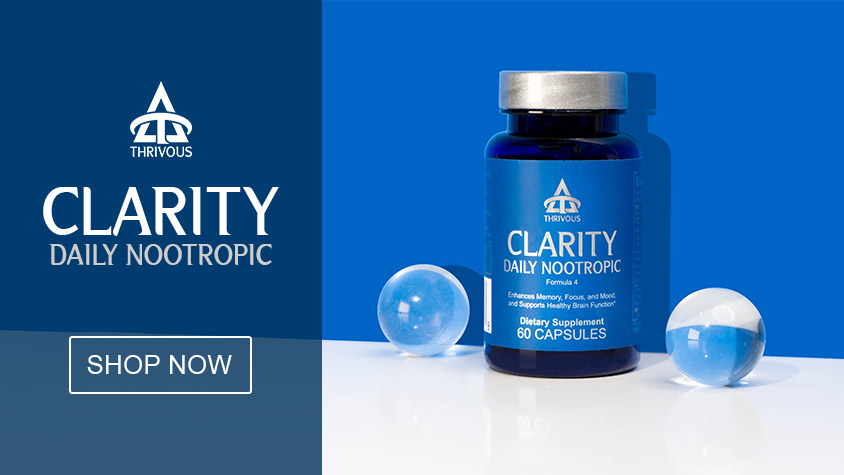
Thrivous develops Clarity Daily Nootropic to enhance memory, mood, and focus. Each serving provides a clinical dose of Rhodiola rosea, as well as complementary nutrients. As implied by this study, Clarity may enhance visual stability. Clarity Daily Nootropic and Rhodiola rosea are available to purchase online now in the Thrivous store.
More Articles
Don't fall behind! Thrivous monitors new human studies of nootropic and geroprotector supplements, so you can make the best decisions based on the latest science. Supplement Science Updates are part of the free Thrivous newsletter. Subscribe now to receive email about human enhancement, nootropics, and geroprotectors, as well as company news and deals.
Read more articles at Thrivous, the human enhancement company. You can browse recent articles in Thrivous Views. See other Clarity Daily Nootropic, Rhodiola Rosea or Supplement Science Update articles. Or check out an article below.

